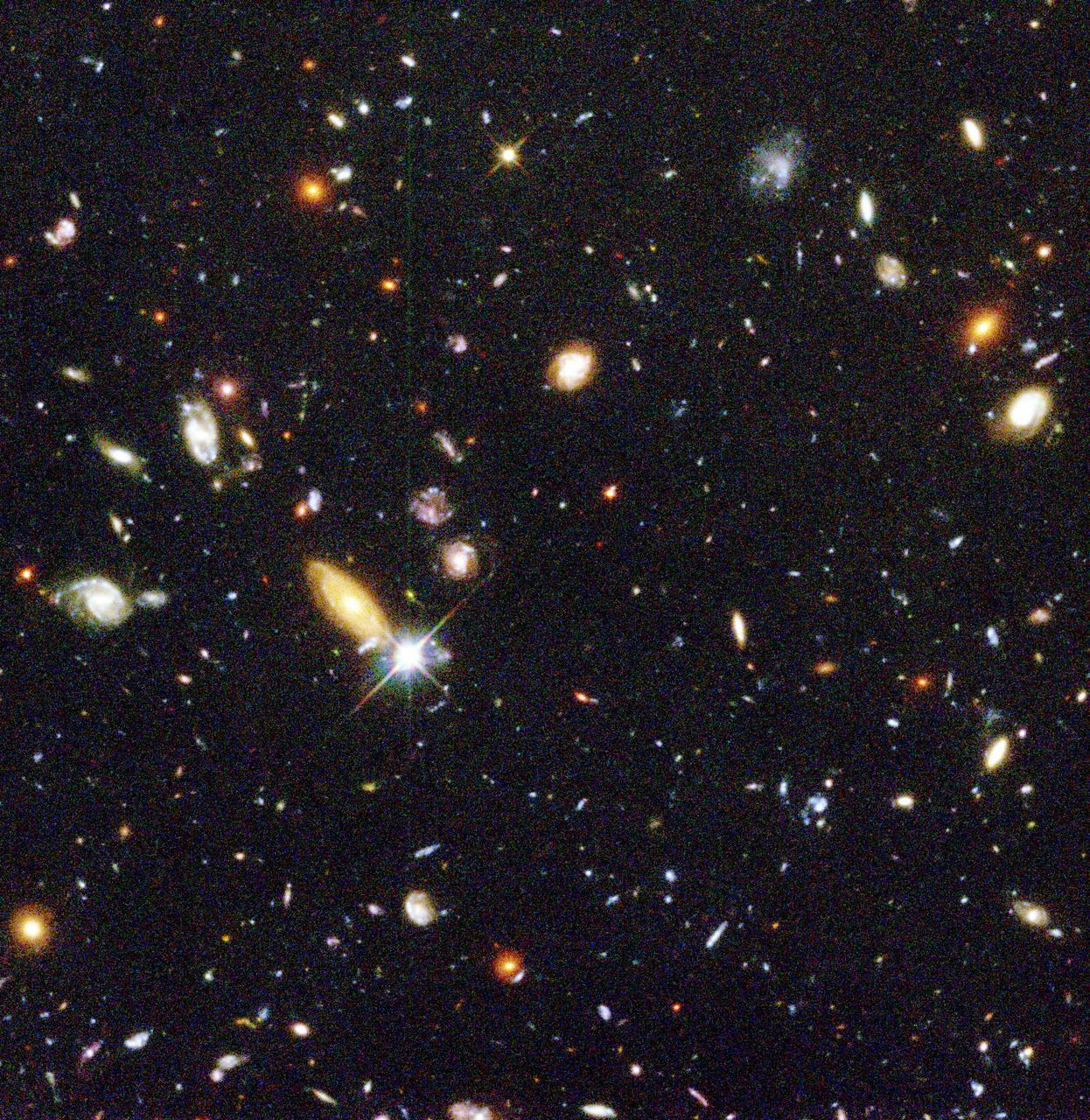
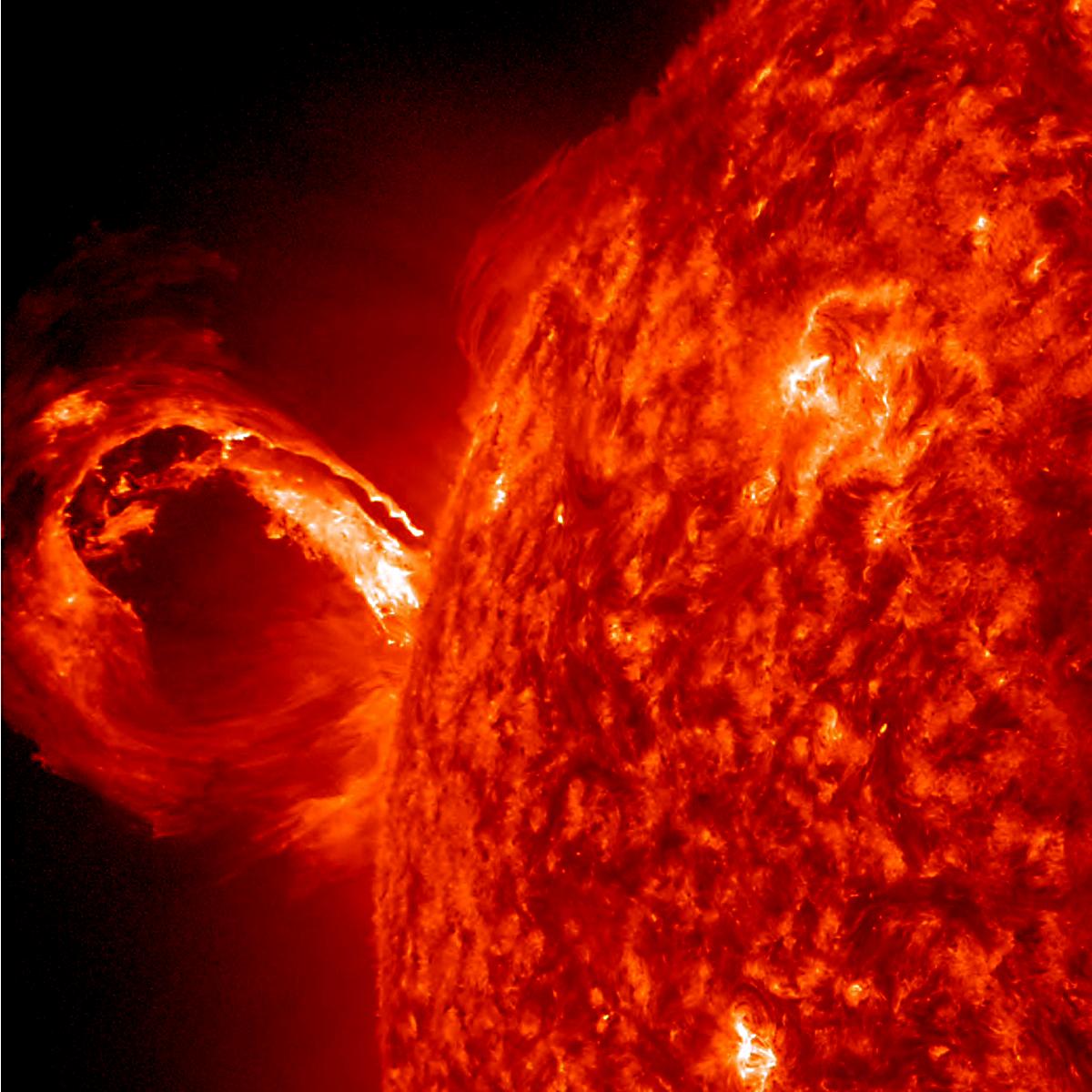
In Part 1 of this series, we explored six astonishing numbers that revealed the age of the universe, the speed of our Solar System, and the unimaginable number of stars and galaxies that surround us.
But our journey through the cosmos is far from over.
The universe is full of numbers that stretch the limits of human imagination. Some describe immense distances, while others tell the story of our Sun’s future or the extreme conditions found in the emptiness of space.
Let’s continue our cosmic adventure with six more remarkable numbers that help us better understand our place in the universe.
7. 109 Earths – The Sun Is Far Bigger Than Our Planet
When we look at the Sun in the sky, it appears to be only slightly larger than the Moon. This is simply a trick of perspective. The Sun is nearly 400 times farther away than the Moon, but it is also about 400 times larger, making both objects appear almost the same size from Earth.
In reality, the difference is enormous.
If you placed 109 Earths side by side, they would stretch across the diameter of the Sun. Our star measures about 1.39 million kilometers (864,000 miles) across, while Earth’s diameter is only about 12,742 kilometers (7,918 miles).
The comparison becomes even more astonishing when we consider volume. More than one million Earths could fit inside the Sun if it were hollow.
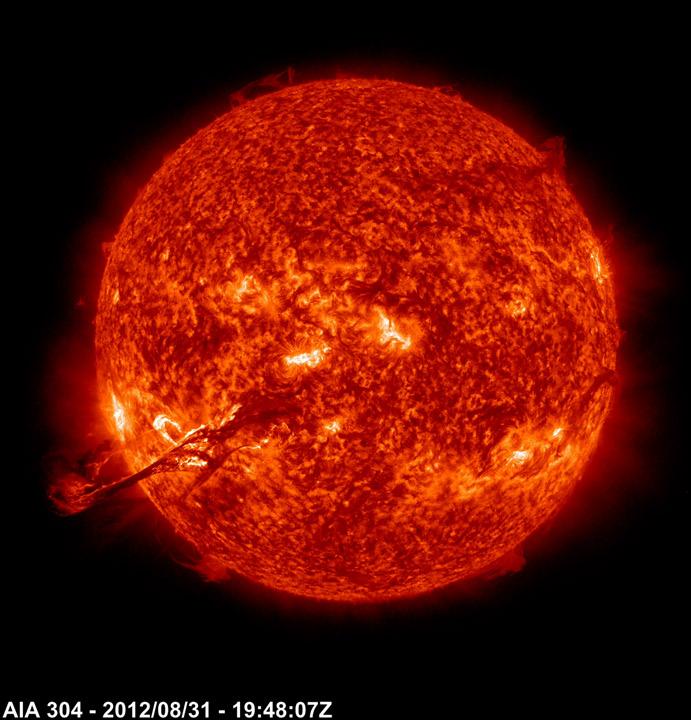
Despite its enormous size, the Sun is considered an average star. Across the universe, astronomers have discovered stars hundreds or even thousands of times larger.
Why It Matters
The Sun dominates our Solar System, containing more than 99% of its total mass. Yet among the countless stars in the universe, it is simply one ordinary star.
8. –270°C – Deep Space Is Almost as Cold as Physics Allows
People often imagine space as being filled with icy winds, but space is almost completely empty.
Without an atmosphere to trap heat, temperatures in deep space fall to around −270°C (−454°F). This is only a few degrees above absolute zero, the coldest temperature theoretically possible.
Absolute zero, which is −273.15°C, represents the point where atoms possess the minimum amount of thermal energy allowed by the laws of physics.
Although deep space is incredibly cold, astronauts orbiting Earth don’t freeze instantly. When exposed to sunlight, objects in space can become extremely hot because there is no atmosphere to block the Sun’s radiation. In the shade, however, temperatures can plunge dramatically.
Space is therefore a place of extreme temperature differences rather than constant cold.
Why It Matters
Understanding these harsh conditions helps engineers design spacecraft, satellites, and spacesuits capable of protecting both equipment and astronauts.
9. 93 Billion Light-Years – The Size of the Observable Universe
One of the most surprising facts about the universe is that it is much larger than its age might suggest.
Since the universe is about 13.8 billion years old, you might expect the observable universe to have a radius of only 13.8 billion light-years.
However, the universe has been expanding ever since the Big Bang.
As light traveled toward us over billions of years, the galaxies that emitted it continued moving farther away because space itself was expanding. As a result, astronomers estimate that the observable universe spans roughly 93 billion light-years in diameter.
This doesn’t necessarily represent the full size of the universe.
Beyond the observable boundary may lie countless additional galaxies whose light has simply not had enough time to reach us.
Whether the universe is finite or infinite remains one of the greatest unanswered questions in cosmology.
Why It Matters
Every improvement in telescope technology allows us to see farther into space—and farther back in time—bringing us closer to understanding the universe’s earliest history.
10. 67,000 Miles Per Hour – Earth Is Constantly Orbiting the Sun
Although Earth feels perfectly still beneath our feet, our planet is traveling around the Sun at an incredible speed of approximately 67,000 miles (107,000 kilometers) per hour.
This rapid motion is what allows Earth to complete one orbit every 365¼ days.
If Earth moved significantly slower, the Sun’s gravity would pull it inward. If it moved much faster, it could escape the Sun’s gravitational influence altogether.
Instead, gravity and motion remain perfectly balanced, producing the nearly circular orbit that has allowed life to flourish for billions of years.

This movement is only one part of Earth’s journey. At the same time, Earth rotates once every 24 hours while the entire Solar System travels through the Milky Way.
We are always moving, even when standing perfectly still.
Why It Matters
Earth’s stable orbit creates the predictable seasons and climate patterns that make life possible.
11. 5 Billion Years – The Sun’s Remaining Lifetime
The Sun has been shining for roughly 4.6 billion years, converting hydrogen into helium through nuclear fusion.
Fortunately for life on Earth, it still has plenty of fuel remaining.
Astronomers estimate that the Sun will continue burning in much the same way for another five billion years.
Eventually, however, the hydrogen in its core will become depleted.
As fusion slows, the Sun will expand dramatically, becoming a red giant. During this stage, it will grow so large that it may engulf Mercury and Venus. The fate of Earth remains uncertain, but even if our planet survives, the intense heat will almost certainly render it uninhabitable.
After shedding its outer layers, the Sun will leave behind a dense stellar remnant known as a white dwarf, which will slowly cool over billions of years.
Why It Matters
Stars are not eternal. Like living organisms, they are born, evolve, and eventually die, enriching the universe with the elements needed to form future generations of stars and planets.
12. 40 Trillion Kilometers – The Distance to Our Nearest Stellar Neighbor
Beyond our Sun, the closest known star is Proxima Centauri, located approximately 40 trillion kilometers (4.2 light-years) away.
Although this makes it our nearest stellar neighbor, the distance is still almost impossible to comprehend.
Imagine traveling there in a modern passenger airplane.
The journey would take hundreds of thousands of years.
Even the fastest spacecraft ever launched by humanity would require thousands of years to reach Proxima Centauri.
This immense distance explains why interstellar travel remains one of the greatest technological challenges facing humanity.
Scientists are already exploring ideas for future missions using laser-powered light sails and other advanced propulsion technologies, but practical journeys to another star remain a goal for future generations.
Why It Matters
The vast distances between stars remind us that the universe is far larger than our everyday experience suggests. Even our nearest stellar neighbor lies across an almost unimaginable cosmic gulf.
Final Thoughts
The universe is filled with numbers that challenge our imagination.
A star large enough to fit more than a million Earths inside it. Temperatures only a few degrees above absolute zero. A universe stretching some 93 billion light-years across. A planet racing around the Sun at 67,000 miles per hour. A star with billions of years still left to shine. And the nearest neighboring star sitting an incredible 40 trillion kilometers away.
Each of these numbers tells a story about the cosmos.
Together, they reveal a universe that is ancient, immense, and constantly changing.
As astronomy continues to advance, new telescopes and space missions will undoubtedly refine these measurements and uncover even more extraordinary discoveries. Every new observation expands our understanding of the cosmos—and reminds us how much there is still left to explore.
The next time you look up at the night sky, remember that every point of light represents a story measured not just in distance, but also in time, energy, and the remarkable laws of nature that govern our universe.
Frequently Asked Questions
How many Earths could fit inside the Sun?
Although about 109 Earths could fit across the Sun’s diameter, its enormous volume means that more than one million Earths could fit inside the Sun.
Why is space so cold?
Deep space contains very little matter to absorb or retain heat, leaving its temperature close to absolute zero.
Is the universe really 93 billion light-years across?
The observable universe is estimated to be about 93 billion light-years in diameter because space has expanded while light has been traveling toward us since the Big Bang.
Will the Sun eventually die?
Yes. Astronomers estimate that the Sun will exhaust the hydrogen in its core in about five billion years, after which it will become a red giant before ending its life as a white dwarf.
What is the nearest star to Earth after the Sun?
The nearest known star beyond the Sun is Proxima Centauri, located approximately 4.2 light-years, or about 40 trillion kilometers, away.
This article is an original educational work inspired by the numerical themes presented in “The Universe in 12 Numbers.” The explanations, structure, and wording have been written independently while presenting the scientific concepts covered in the source material