I asked ChatGPT this:
Can you give me ten ideas on other ways I can teach about human settlement of space to children who often have no school, no teacher, and no technology, so that I can still prepare them for the future in which they’ll live.
ChatGPT replied:
Yes. If children have no school, no trained teacher, and little or no technology, the lessons must rely on things they already have: stories, games, observation, conversation, imagination, and simple local materials. Teaching about space settlements also becomes a way to teach science, engineering, cooperation, health, planning, and problem-solving.
Here are ten approaches that can work almost anywhere.
1. Tell “The Village on the Moon” Stories
Instead of beginning with rockets, begin with people.
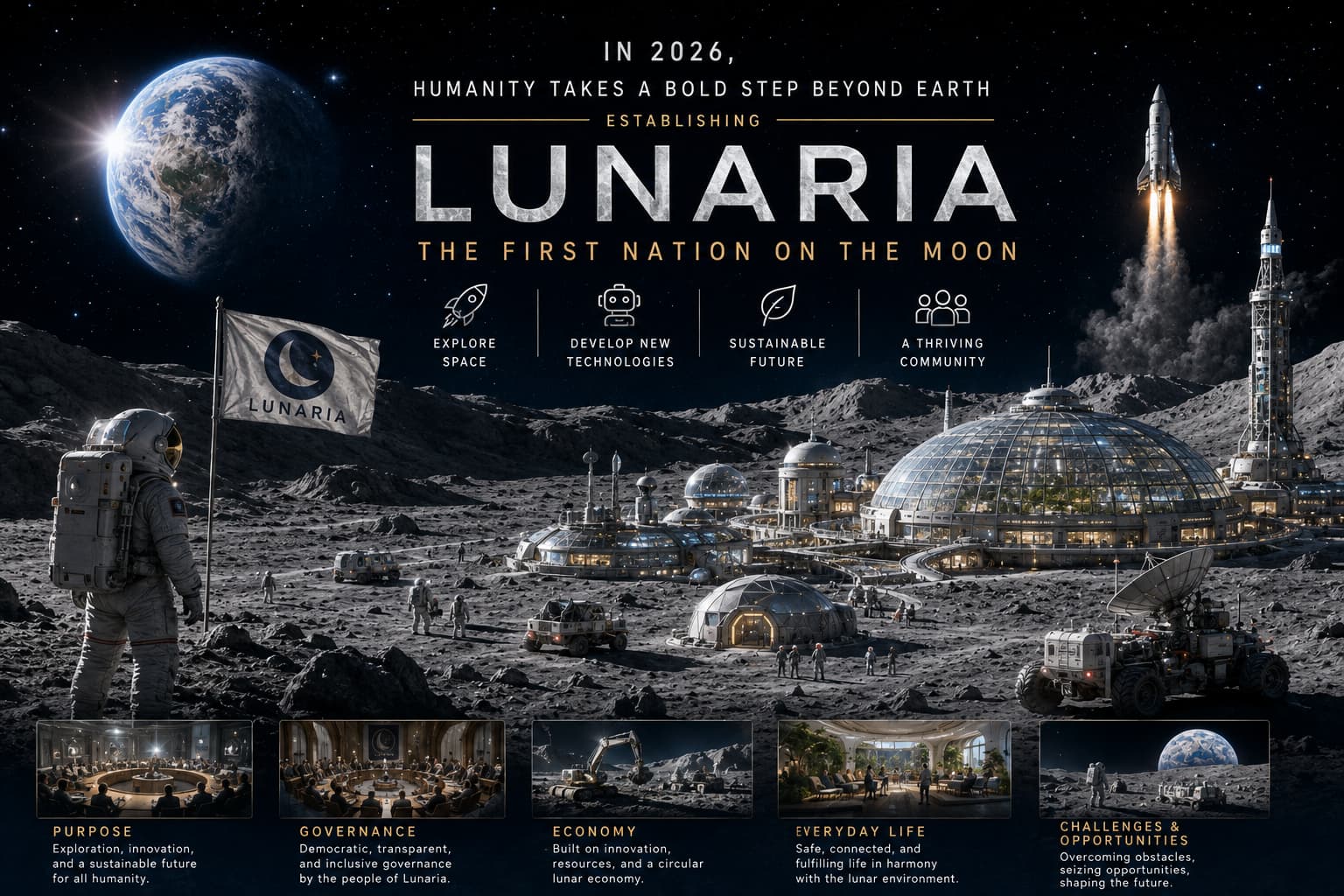
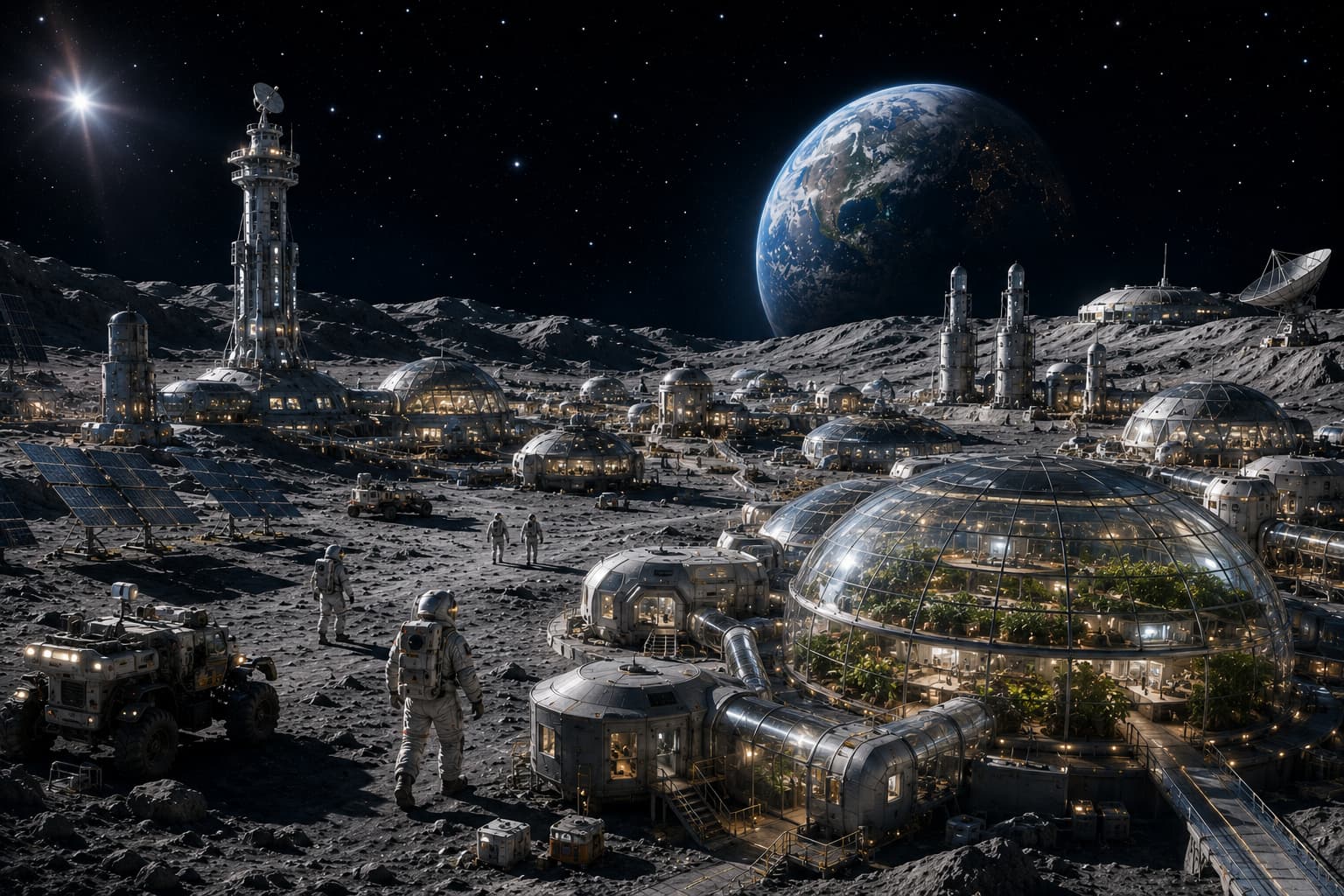
Each story follows children living in a Moon village or asteroid settlement who face everyday challenges:
- finding water
- growing food
- repairing homes
- sharing limited supplies
- solving disagreements
- welcoming newcomers
Each story ends with a question:
“What would you do?”
Children naturally discuss science without realizing they are studying engineering.
2. Turn Every Lesson into a Problem-Solving Challenge
Present one problem each day.
Examples:
- Everyone has only one cup of water today.
- The greenhouse window cracked.
- The air cleaner stopped working.
- A dust storm covers the solar panels.
- A baby is born in space.
Ask:
- What happens first?
- What happens next?
- Who should help?
- What would make things worse?
- What would make things better?
This teaches systems thinking.
3. Use Local Objects as Space Equipment
Everything becomes something else.
- stones become asteroids
- sticks become solar panels
- leaves become food crops
- bottles become oxygen tanks
- rope becomes communication lines
- sand becomes lunar soil
No expensive materials are needed.
Children build entire settlements from the ground.
4. Play Cooperative Survival Games
Rather than competition, everyone wins together.
Example:
“The oxygen lasts five more days.”
Each child suggests one action.
The group votes.
Then discuss what happened.
This teaches cooperation, planning, leadership, and resource management.
5. Compare Space With Everyday Village Life
Ask:
“What problems does our village already solve?”
Examples:
| Village | Space Settlement |
|---|---|
| Finding clean water | Recycling every drop |
| Growing crops | Hydroponics |
| Building homes | Habitat construction |
| Sharing tools | Shared equipment |
| Taking care of neighbors | Community survival |
Children discover they already understand many space problems.
6. Teach Through Observation of Nature
Nature is the first science classroom.
Observe:
- ants organizing work
- birds building nests
- spiders making strong structures
- plants growing toward sunlight
- termites cooling their nests
Then ask:
“Could people use this idea on Mars?”
This introduces biomimicry.
7. Build a “Future Council”
Every week children become the leaders of a new space settlement.
Assign simple roles:
- engineer
- farmer
- doctor
- builder
- scientist
- explorer
- teacher
Present one challenge.
Everyone explains their decision.
This teaches leadership and civic responsibility.
8. Create Long-Term Imagination Projects
Ask children to imagine:
“Our grandchildren will live in space.”
Then ask:
What should they invent?
Possible ideas:
- better farms
- safer houses
- new sports
- cleaner energy
- better robots
- stronger spacesuits
Children begin thinking decades ahead instead of only about tomorrow.
9. Teach Cause and Effect Chains
Every decision has consequences.
Example:
“We forget to repair one air pipe.”
Then ask:
What happens after one hour?
One day?
One week?
One month?
One year?
Children learn that small actions can have large cumulative effects—a valuable lesson for engineering, health, and community life.
10. Let Children Become the Teachers
After each lesson, every child teaches one younger child or family member.
They might:
- retell the story
- explain one idea
- ask a discussion question
- demonstrate a model
- lead a game
Teaching reinforces learning and allows knowledge to spread even where there are few formal schools.
The Bigger Goal
The real purpose of teaching about human settlement of space is not simply to prepare children to become astronauts. It is to help them develop habits of mind that will be valuable wherever they live, on Earth or beyond:
- Curiosity: asking “Why?” and “What if?”
- Problem-solving: finding practical solutions with limited resources.
- Cooperation: working together to achieve goals no one can accomplish alone.
- Systems thinking: understanding how food, water, air, energy, and people are interconnected.
- Creativity: imagining new possibilities and testing ideas.
- Responsibility: recognizing that individual actions affect the whole community.
- Adaptability: responding thoughtfully to change and unexpected challenges.
- Long-term thinking: planning for future generations rather than only immediate needs.
- Resourcefulness: making effective use of simple, locally available materials.
- Hope: believing that today’s children can help build a better future.
These methods require very little equipment, yet they cultivate many of the scientific, engineering, and social skills that future generations will need whether they remain on Earth, help build sustainable cities, or one day participate in settlements on the Moon, Mars, or beyond.