Discover six astonishing numbers that reveal the true scale of the universe—from its age to the trillions of galaxies that fill the observable cosmos.
Have you ever looked up at the night sky and wondered just how vast the universe really is?
Astronomy is filled with numbers so enormous that they almost lose their meaning. Billions of years. Trillions of galaxies. Distances measured in light-years. While these figures can seem impossible to imagine, each one tells an incredible story about our place in the cosmos.
In this article, we’ll explore six remarkable numbers that reveal the age, size, and motion of our universe. By the end, you’ll have a new appreciation for the tiny corner of the cosmos we call home.
1. 13.8 Billion Years – The Age of the Universe
The universe has existed for approximately 13.8 billion years. According to modern cosmology, everything we know—space, time, matter, and energy—began in an event known as the Big Bang.
This doesn’t mean the Big Bang was an explosion in space. Instead, it marks the beginning of space itself. Over billions of years, the universe expanded and cooled, allowing particles to form atoms, atoms to form stars, and stars to gather into galaxies. Eventually, planets formed around some of those stars, creating the conditions for life to emerge.
Although 13.8 billion years is an incomprehensibly long time, there’s a useful way to visualize it.
Imagine compressing the entire history of the universe into a single calendar year. The first stars would appear in January, our Solar System wouldn’t form until early September, and all of recorded human history would occupy only the final few seconds before midnight on December 31.
Our entire civilization is just a tiny chapter in a story that has been unfolding for billions of years.
Why It Matters
The age of the universe reminds us that humanity is incredibly young. Every scientific discovery we’ve made has occurred during the briefest moment in cosmic history.
2. 1.3 Million Miles Per Hour – Our Solar System Never Stops Moving
It may feel like you’re sitting perfectly still while reading this article, but you’re actually moving through space at an astonishing speed.
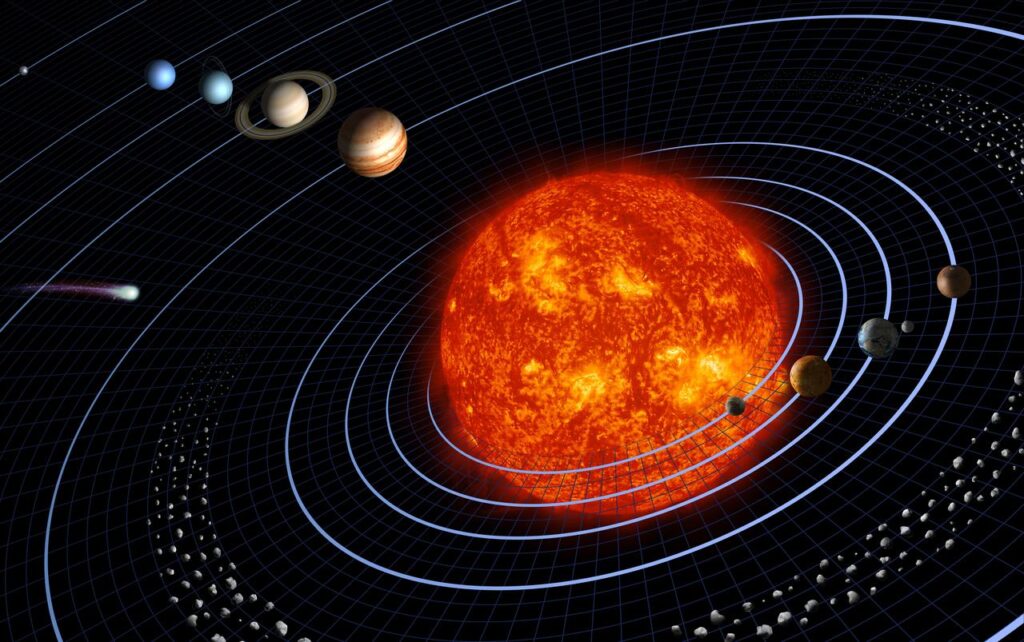
The Earth rotates on its axis, revolves around the Sun, and travels together with the entire Solar System as the Milky Way orbits through the universe. Relative to the cosmic microwave background—the ancient light left over from the early universe—our Solar System moves at roughly 1.3 million miles (about 2.1 million kilometers) per hour.
Despite this incredible speed, we never notice it.
The reason is simple: everything around us moves together. The atmosphere, the oceans, our cities, and even our bodies share the same motion, leaving us with no sensation of traveling through space.
It’s much like sitting in a smoothly flying airplane. You don’t feel the aircraft’s speed unless it changes direction or experiences turbulence.
Why It Matters
The universe is far more dynamic than it appears. Even during our quietest moments, we’re passengers on a planet racing through the cosmos.
3. 8 Minutes 20 Seconds – Sunlight Is Already Old
Every morning, sunlight floods our planet, making life on Earth possible.
But the light reaching your eyes didn’t leave the Sun a moment ago.
Because light travels at a finite speed—about 300,000 kilometers (186,000 miles) per second—it takes approximately 8 minutes and 20 seconds to travel the nearly 150 million kilometers separating Earth and the Sun.
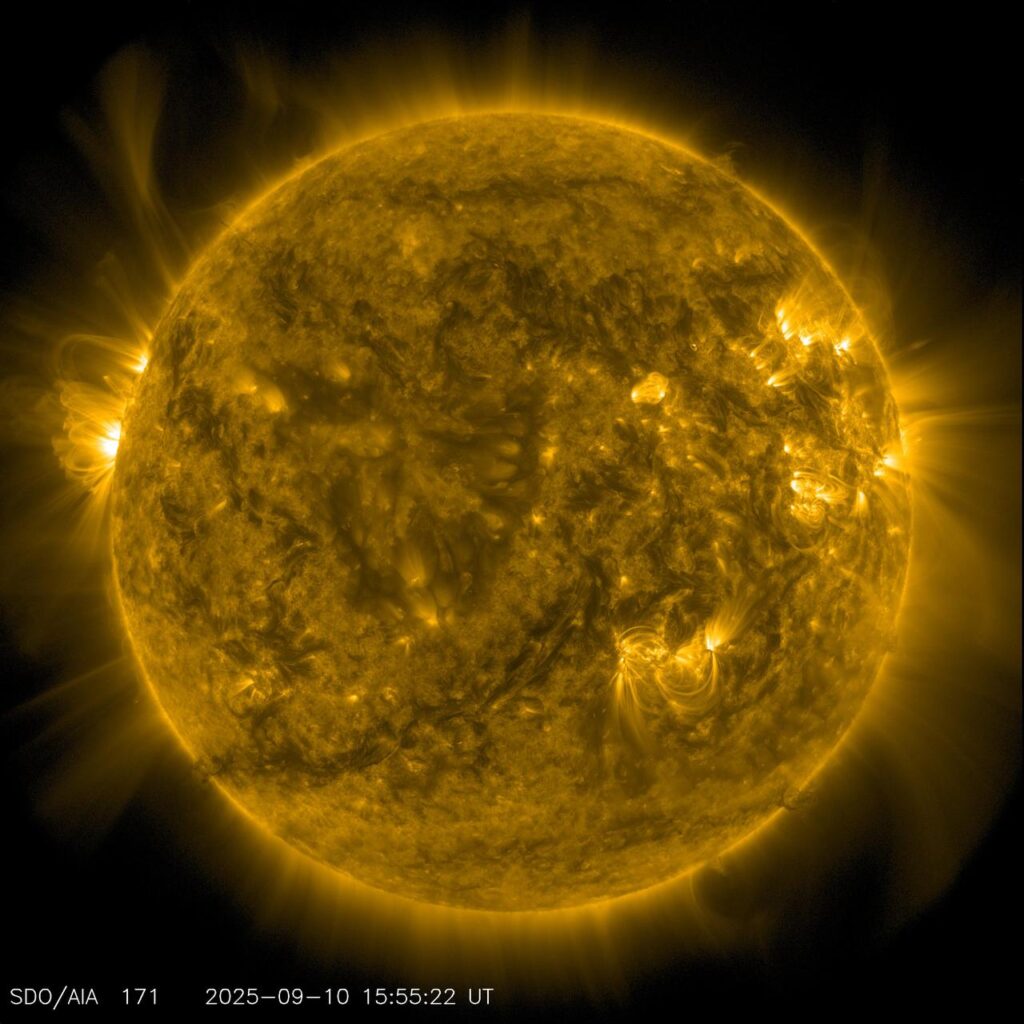
That means when you watch a sunrise, you’re actually seeing the Sun as it appeared more than eight minutes earlier.
This delay also reveals an interesting consequence of the universe’s speed limit. If the Sun could somehow disappear instantly—a purely hypothetical situation—Earth wouldn’t know about it for another eight minutes. The final rays of sunlight would continue their journey toward us before darkness arrived.
Fortunately, the Sun is expected to continue shining for billions of years.
Why It Matters
Looking into space is always looking into the past. Even our nearest star cannot be observed in real time.
4. 2.5 Million Light-Years – Looking at Andromeda Means Looking Back in Time
On exceptionally dark nights, away from city lights, some people can see a faint smudge in the sky without using a telescope.
That object is the Andromeda Galaxy, our nearest large galactic neighbor.
Its light has traveled approximately 2.5 million years before reaching Earth.

This means the photons entering your eyes tonight began their journey long before modern humans existed. During those millions of years, continents shifted, countless species appeared and disappeared, and humanity eventually evolved into a technological civilization.
Astronomy allows us to look backward through time because light requires time to travel across enormous distances.
The farther away an object is, the older the image we receive.
In a very real sense, telescopes function as time machines.
Why It Matters
Every distant galaxy offers a glimpse into the universe’s history, allowing astronomers to study how galaxies have changed over billions of years.
5. More Than 100 Billion Stars – That’s Only Our Galaxy
Our Sun may seem unique, but it is only one among an extraordinary number of stars.
Astronomers estimate that the Milky Way contains at least 100 billion stars, with some estimates reaching several hundred billion.
To appreciate this number, imagine counting one star every second without ever taking a break.
It would take more than 3,000 years just to count one hundred billion stars.
Even more remarkable is that many of these stars are thought to host planets of their own. Modern space telescopes have already confirmed thousands of exoplanets orbiting distant stars, suggesting that planetary systems may be common throughout our galaxy.
Some of those worlds may resemble Earth. Others are unlike anything we have ever imagined.
Why It Matters
Our Sun is not special. It is one ordinary star among billions, reminding us that the universe likely contains an extraordinary diversity of planetary systems.
6. Around 2 Trillion Galaxies – The Universe Is Even Bigger Than We Thought
For many years, astronomers believed the observable universe contained around one hundred billion galaxies.
As telescopes improved and computer models became more sophisticated, scientists realized the number was far larger.
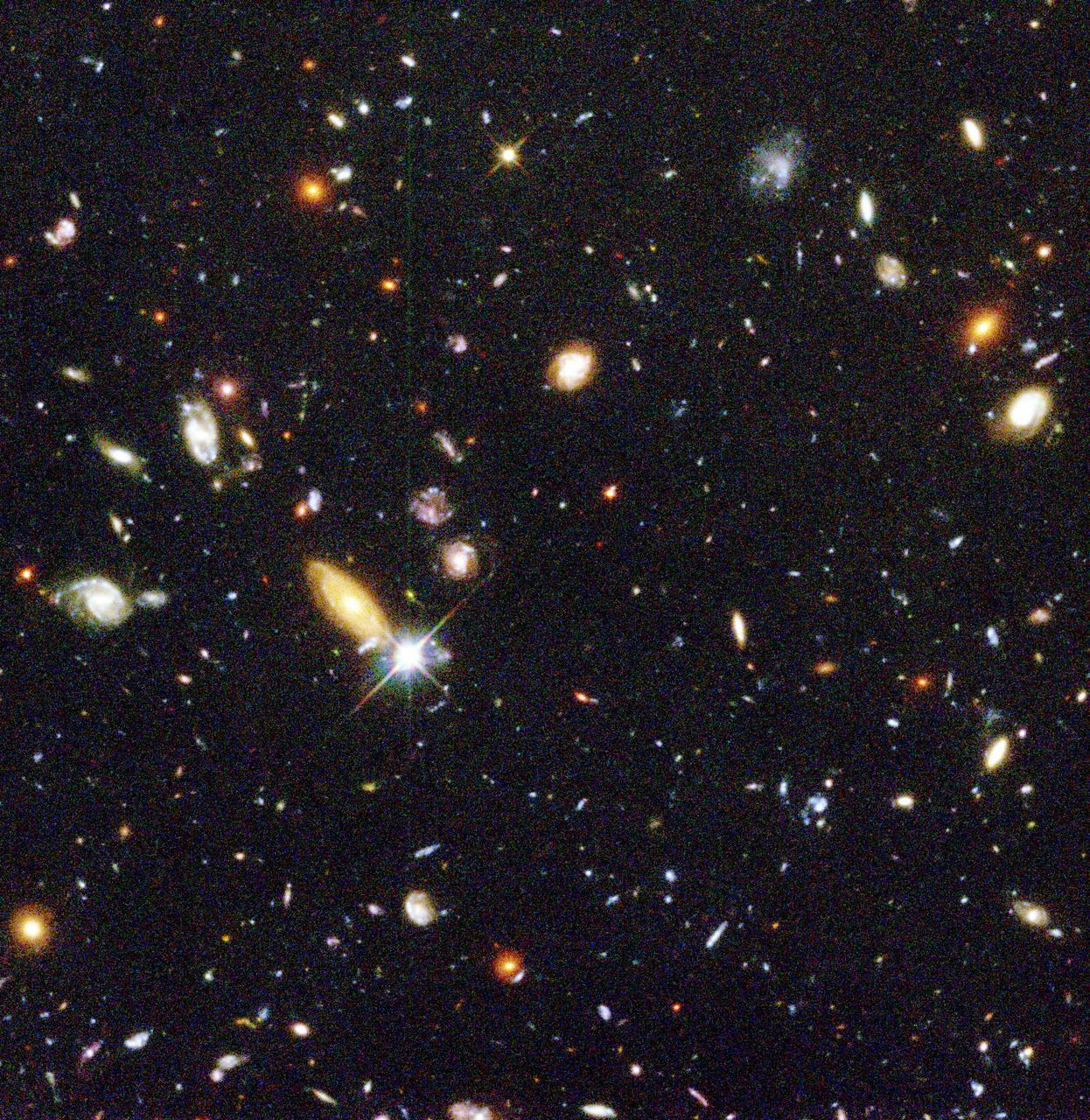
Current estimates suggest the observable universe may contain around two trillion galaxies.

Each galaxy is an enormous collection of stars, gas, dust, dark matter, and planetary systems. Some galaxies contain only a few million stars, while giant galaxies hold hundreds of billions or even trillions.
When we look at deep-space images captured by powerful telescopes, many of the tiny points of light are not individual stars—they are entire galaxies, each containing countless suns.
The scale is almost impossible to comprehend.
And beyond the observable universe may lie regions that are simply too distant for their light to have reached us since the beginning of cosmic time.
Why It Matters
Every galaxy represents another vast cosmic neighborhood. Together they reveal a universe whose true scale stretches far beyond everyday imagination.
Final Thoughts
The universe constantly challenges our intuition.
Its history spans 13.8 billion years, our Solar System races through space at over a million miles per hour, sunlight takes eight minutes to reach us, and the faint glow of the Andromeda Galaxy began its journey 2.5 million years ago.
Yet these are only the beginning.
In Part 2, we’ll explore six more astonishing numbers that reveal the size of the Sun, the freezing temperature of deep space, Earth’s incredible orbital speed, the future of our star, and the staggering distance to our nearest stellar neighbor.
The deeper we explore the universe, the more we discover that our world is both incredibly small—and unimaginably precious.
Frequently Asked Questions
How old is the universe?
The best current scientific estimate places the age of the universe at approximately 13.8 billion years.
Why does sunlight take over eight minutes to reach Earth?
Although light travels incredibly fast, the Sun is nearly 150 million kilometers (93 million miles) away, so sunlight needs about 8 minutes and 20 seconds to complete the journey.
Can we really see another galaxy without a telescope?
Yes. Under dark skies, the Andromeda Galaxy can be seen with the naked eye as a faint, fuzzy patch of light.
How many stars are in the Milky Way?
Astronomers estimate our galaxy contains at least 100 billion stars, and possibly several hundred billion.
How many galaxies exist in the observable universe?
Current estimates suggest there may be around two trillion galaxies in the observable universe, though this number continues to be refined as astronomical observations improve.
Inspired by the fascinating cosmic comparisons presented in “The Universe in 12 Numbers,” this article presents the concepts in original language with expanded explanations for educational purposes.